
Ecommerce Fulfillment
Trusted E-Commerce Fulfillment Partner in Bhiwandi.
India’s e-commerce market is growing at an unprecedented pace, fueled by increasing internet penetration, widespread smartphone usage, the rapid adoption of digital payments, and evolving consumer buying behavior. From metros to tier-2 and tier-3 cities, online shopping has become a part of everyday life, pushing brands to deliver faster, more reliable, and more consistent customer experiences.
Choosing the right e-commerce fulfillment model plays a vital role in balancing cost efficiency, delivery speed, operational control, and scalability. A well-structured fulfillment strategy helps businesses streamline operations, reduce logistics expenses, manage inventory effectively, and respond quickly to fluctuating demand—especially during peak sale seasons.
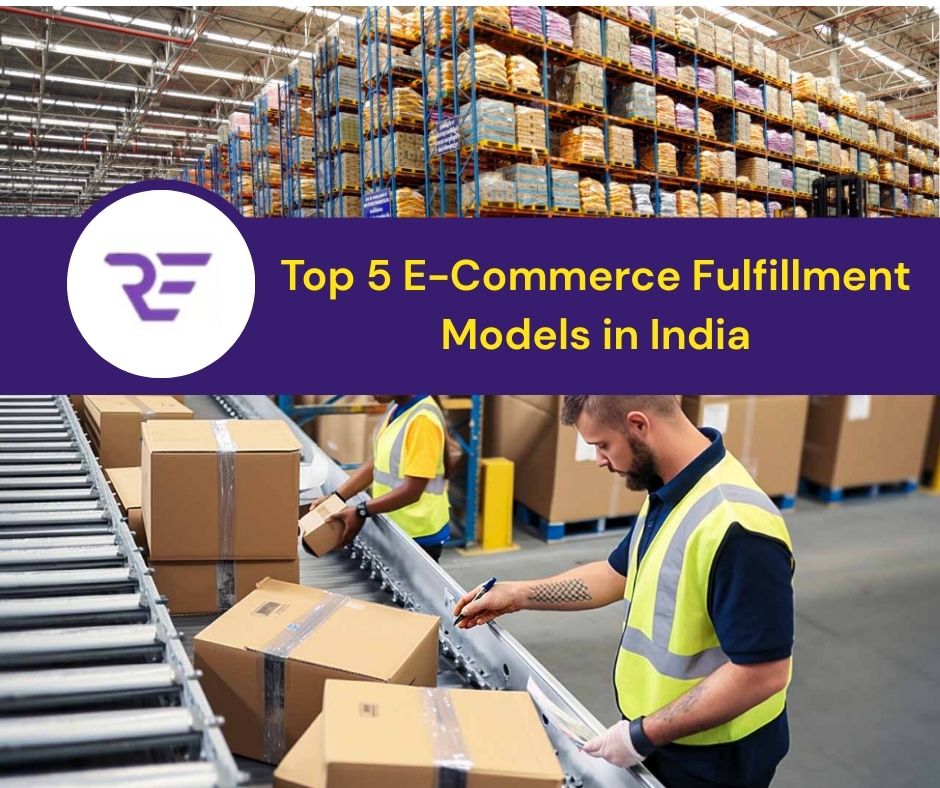
In this article, we explore the top 5 e-commerce fulfillment models in India, highlighting their key features, advantages, and ideal use cases. We also guide you on how to choose the right fulfillment model for your business, based on order volume, sales channels, growth plans, and customer expectations—helping you build a fulfillment setup that supports long-term success.
Top 5 E-Commerce Fulfillment Models in India -
In-House Fulfillment (Self-Fulfillment)
In this model, businesses manage the entire fulfillment process internally, including warehousing, inventory management, order processing, packing, shipping coordination, and returns.
- Full Operational Control – Brands have complete control over inventory, packaging quality, branding, and dispatch timelines, allowing for a customized customer experience.
Direct Inventory Handling – Inventory is stored in the company’s own facility, making it easier to monitor stock levels and manage limited or specialized SKUs.
Cost-Effective at Small Scale – In-house fulfillment works well for startups or small businesses with low order volumes, as it avoids third-party fulfillment fees.
Limited Scalability – As order volumes grow, fulfillment becomes more complex and resource-intensive, requiring additional space, manpower, and systems.
Third-Party Logistics (3PL) Fulfillment
In this model, businesses outsource warehousing, order processing, packing, shipping, and returns to a professional logistics partner.
Scalable Operations – Easily handles growing and fluctuating order volumes without heavy infrastructure investment.
Faster Deliveries – Multi-location warehouses help reduce transit time and shipping costs.
Technology-Driven Fulfillment – Advanced WMS provides real-time inventory visibility, order tracking, and platform integrations.
Reduced Operational Burden – Allows brands to focus on sales, marketing, and product growth.
Marketplace Fulfillment
Marketplaces like Amazon and Flipkart manage storage, packing, shipping, and customer delivery for sellers.
Faster Marketplace Deliveries – Improves delivery speed and eligibility for Prime or Assured tags.
Higher Customer Trust – Marketplace-managed fulfillment enhances buyer confidence and conversions.
Simplified Operations – Reduces day-to-day logistics management for sellers.
Higher Fees & Limited Branding – Comes with higher fulfillment costs and restricted brand visibility.
Dropshipping Fulfillment
In dropshipping, products are shipped directly from the supplier to the customer, without the seller holding inventory.
Low Upfront Investment – No inventory or warehousing costs.
Easy Product Testing – Ideal for testing new products with minimal risk.
Limited Control – Quality, packaging, and delivery timelines depend on suppliers.
Lower Profit Margins – Margins are usually thinner due to supplier dependence.
Hybrid Fulfillment Model
This model combines two or more fulfillment approaches, such as in-house + 3PL or marketplace + 3PL.
Operational Flexibility – Different fulfillment strategies for different sales channels.
Optimized Cost & Speed – Balances cost efficiency with faster deliveries.
Better Risk Management – Reduces dependency on a single fulfillment source.
Requires Strong Coordination – Needs accurate inventory sync and process alignment.
How to Choose the Right Fulfillment Model for Your Business -
Order Volume & Growth Plans
Your current order volume and future growth expectations play a crucial role in selecting the right fulfillment model. Businesses with low or predictable order volumes can manage operations through in-house fulfillment. However, as order volumes increase or fluctuate during sales seasons, managing fulfillment internally becomes challenging. Scalable models such as 3PL or hybrid fulfillment allow businesses to handle sudden demand spikes without investing heavily in infrastructure or manpower, making them ideal for fast-growing brands.
Sales Channels
The fulfillment model should align with where and how you sell. If your business primarily operates on marketplaces like Amazon or Flipkart, marketplace fulfillment can help improve delivery speed and customer trust. However, for brands selling through D2C websites, marketplaces, social commerce, and B2B channels, a 3PL or hybrid fulfillment model offers greater flexibility, centralized inventory management, and smoother multi-channel order processing.
Delivery Speed Expectations
Today’s customers expect faster and more reliable deliveries, often within one or two days. Your fulfillment model directly impacts delivery timelines. Using fulfillment centers located closer to your customers—especially through a pan-India 3PL network—reduces transit time, shipping costs, and delivery failures. Faster deliveries not only improve customer satisfaction but also increase repeat purchases and brand loyalty.
Cost & Profit Margins
Fulfillment costs can significantly impact overall profitability. It is important to compare all cost components, including warehousing, picking, packing, shipping, returns, and reverse logistics. While in-house fulfillment may appear cost-effective initially, hidden costs such as labor, rent, technology, and errors can add up. Outsourced fulfillment models like 3PL often provide better cost efficiency through economies of scale and optimized logistics processes.
Operational Control & Technology
Modern fulfillment relies heavily on technology. If real-time inventory visibility, accurate order processing, automated reporting, and seamless platform integrations are important to your business, your fulfillment model must support these capabilities. Professional 3PL partners typically offer advanced Warehouse Management Systems (WMS), API integrations with marketplaces and D2C platforms, and detailed analytics—helping brands maintain control while reducing operational complexity.
A Trusted 3PL Fulfillment Partner in Bhiwandi for E-Commerce Brands -
Choosing the right 3PL fulfillment partner is not just about warehousing—it is about building a reliable, scalable, and future-ready supply chain. As discussed throughout this article, growing e-commerce and FMCG brands need fulfillment solutions that deliver speed, accuracy, flexibility, and cost efficiency.
At Robin Enterprises, we support brands with strategically located warehousing in Bhiwandi, combined with technology-driven 3PL and e-commerce fulfillment solutions. Our modern infrastructure and advanced Warehouse Management System (WMS) ensure real-time inventory visibility, accurate order processing, and seamless multi-channel fulfillment across marketplaces, D2C platforms, and traditional distribution networks.
With dedicated FMCG handling teams, SKU-level accuracy, scalable capacity for peak seasons, and pan-India distribution support, we help brands reduce logistics complexity, improve delivery timelines, and consistently meet customer expectations. Whether you are transitioning from in-house fulfillment, scaling through a 3PL model, or managing a hybrid fulfillment strategy, Robin Enterprises provides the expertise and operational reliability needed for long-term growth.
📢 Robin Enterprises – Warehouse & 3PL Logistics in Bhiwandi
Robin Enterprises offers FMCG-ready warehousing, regional and pan-India e-commerce fulfillment, and end-to-end 3PL logistics services designed to support high-volume, fast-moving supply chains. If you are looking for a fulfillment partner that understands the operational demands of e-commerce and FMCG businesses, Robin Enterprises is ready to support your growth—every step of the way.
Call: +91 9167261110
Email: info@robinenterprises.co.in
Visit: robinenterprises.co.in
Your Trusted Warehousing Partner !
Related Posts
Best Ecommerce Fulfillment Services : A Key to Online Business Success
Ecommerce Fulfillment March 15, 2025 Robin Enterprises E-commerce Fulfillment Services and Warehousing Service in Bhiwandi – Robin Enterprises : Trusted Partner for All Your Ecommerce…
