
Logistics
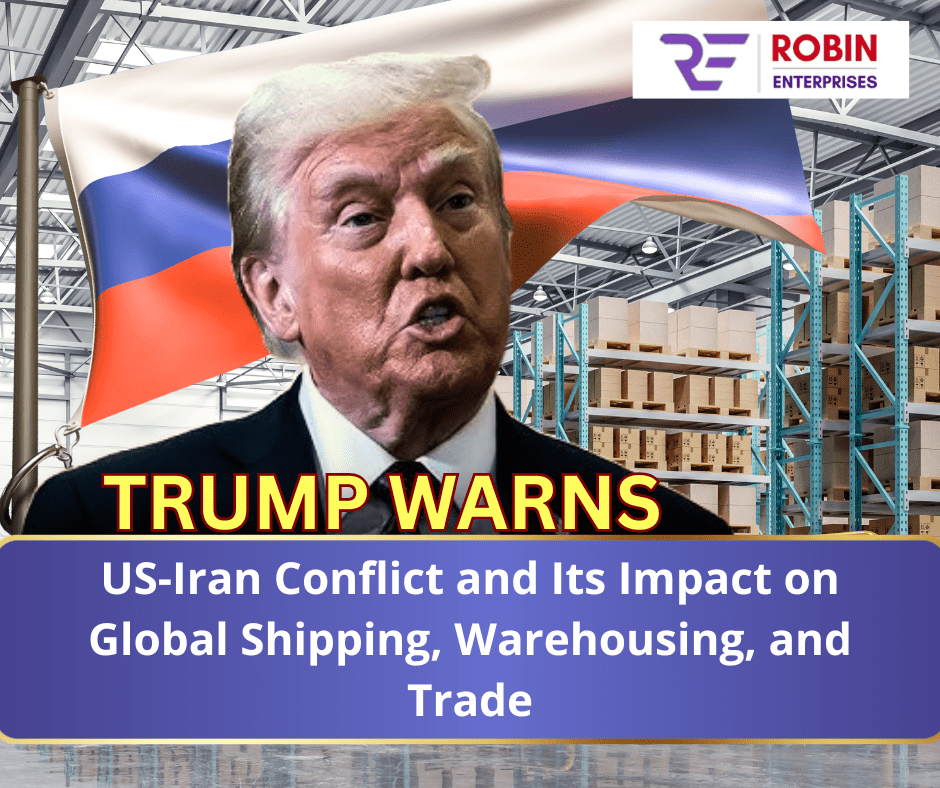
The Hidden Impact on Global Logistics and E-commerce Supply Chains.
Global trade and supply chains depend heavily on geopolitical stability. When tensions rise between powerful nations, the effects are quickly felt across shipping routes, freight costs, logistics operations, and international trade networks.
The ongoing tensions between the United States and Iran have raised concerns in the global logistics industry. The Middle East plays a vital role in global energy supply and maritime trade. Any instability in this region can disrupt international shipping routes, increase freight costs, and create supply chain uncertainties for businesses around the world.
For companies involved in international trade, e-commerce, and logistics operations, understanding the potential impact of geopolitical conflicts is essential for building resilient supply chains.
Why the Middle East Is Critical for Global Shipping -
The Middle East is one of the most strategically important regions for global trade. Several major maritime routes pass through this region, connecting Asia, Europe, and North America. One of the most important shipping routes in the world is the Strait of Hormuz, which serves as a key gateway for oil exports from the Persian Gulf to global markets.
Approximately 20% of the world’s oil supply passes through this narrow waterway, making it a critical chokepoint for global energy transportation. Any conflict or military activity in this region can disrupt shipping movements and increase risks for cargo vessels. If the conflict between the United States and Iran escalates, shipping companies may need to reroute vessels or delay shipments, which can significantly affect international trade flows.
Impact on Global Shipping Routes -
Shipping companies rely on safe and predictable maritime routes to ensure timely delivery of goods. However, geopolitical conflicts can create uncertainty and risks for vessels traveling through sensitive regions.
If tensions escalate in the Middle East, shipping companies may face several challenges:
- Increased security threats for cargo vessels
- Temporary closure of key maritime routes
- Delays in cargo shipments
- Diversion of ships to longer alternative routes
These disruptions can lead to significant delays in the transportation of goods across international markets.
For example, if vessels avoid high-risk regions such as the Strait of Hormuz, they may need to travel through longer routes, increasing transit time and operation
Effects on Global Trade and Supply Chains -
Modern supply chains are highly interconnected, meaning that disruptions in one region can affect businesses worldwide.When shipping routes are disrupted due to geopolitical conflicts, companies may face:
- Delayed raw material shipments
- Production slowdowns
- Increased transportation costs
- Inventory shortages in key markets
Industries such as electronics, automotive manufacturing, and e-commerce are particularly vulnerable to supply chain disruptions.
Global retailers that rely on just-in-time inventory models may experience stock shortages if shipments are delayed or rerouted.
Impact on Warehousing and Inventory Management -
When supply chains become unpredictable, businesses often rely on warehousing solutions to maintain inventory stability. Warehousing plays a crucial role in ensuring that goods are stored safely and are available for distribution when supply disruptions occur.
During global shipping disruptions, companies may adopt several inventory strategies:
- Increasing safety stock levels
- Storing goods in multiple warehouse locations
- Using regional distribution centers
- Improving demand forecasting and inventory planning
Flexible warehousing infrastructure allows businesses to respond quickly to unexpected disruptions in global supply chains.
Companies that invest in advanced warehousing and logistics infrastructure are better equipped to manage supply chain uncertainties.
How Logistics Companies Can Adapt to Geopolitical Risks -
To remain competitive in an unpredictable global environment, logistics companies must adopt proactive strategies to manage risks.
Some effective strategies include:
Supply Chain Diversification
Businesses should avoid relying on a single transportation route or supplier. Diversifying supply chains reduces the impact of disruptions in any one region.
Multi-Location Warehousing
Using warehouses in different regions helps businesses distribute inventory more efficiently and reduce delays caused by shipping disruptions.
Real-Time Shipment Tracking
Advanced tracking technologies allow logistics companies to monitor shipments and respond quickly to delays or route changes.
Strategic Inventory Planning
Maintaining optimal inventory levels helps businesses avoid stock shortages during supply chain disruptions.
Future Outlook for Global Logistics Industry -
Geopolitical tensions are likely to remain a significant factor influencing global trade and logistics operations.
As international trade continues to grow, 3PL logistics companies must focus on building resilient supply chains capable of adapting to global disruptions.
Investments in technology, warehousing infrastructure, and advanced supply chain management solutions will play a key role in helping businesses navigate uncertain global conditions.
Companies that prioritise flexibility, risk management, and efficient logistics planning will be better positioned to handle the challenges of geopolitical conflicts.
Building a Future-Ready Supply Chain with Robin Enterprises -
The conflict between the United States and Iran highlights how geopolitical tensions can impact global shipping, trade, and supply chain operations. Disruptions in strategic shipping routes such as the Strait of Hormuz can lead to higher freight costs, longer delivery times, and increased supply chain risks for businesses worldwide.
To mitigate these risks, companies must invest in resilient logistics strategies, flexible warehousing solutions, and advanced supply chain technologies. By strengthening their logistics infrastructure and adopting proactive planning strategies, businesses can maintain stability and continue to operate efficiently even during periods of global uncertainty. Robin Enterprises empowers businesses with strategically located warehousing in Bhiwandi, technology-driven inventory management, and 3PL Logistics Solutions tailored to evolving market demands. With modern infrastructure, efficient ecommerce fulfillment processes, and seamless distribution support, we help SMEs, retail brands, e-commerce companies, and FMCG businesses streamline operations while reducing costs. Our scalable and reliable logistics solutions ensure faster deliveries, improved inventory control, and enhanced operational efficiency. By partnering with Robin Enterprises, you gain a dependable logistics ally committed to building a resilient, agile, and growth-oriented supply chain for long-term success.

Partner with Robin Enterprises for flexible, technology-driven warehousing solutions in Bhiwandi designed to build a resilient and future-ready logistics ecosystem.
 Call: +91 9167261110
 Email:info@robinenterprises.co.in
 Visit:robinenterprises.co.in
Your Trusted Warehousing Partner !
Related Posts
Why 3PL is the Best Solution for Businesses in 2025?
Logistics June 2, 2025 Robin Enterprises Choose Your best 3PL Partner in Bhiwandi. In today’s rapidly evolving global marketplace, businesses are under constant pressure to…